
















NewsLine staff
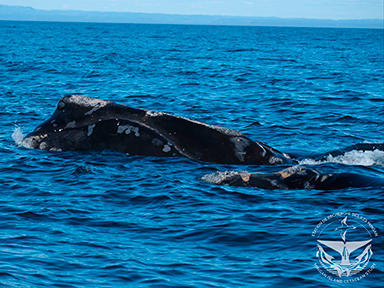
Keep an eye on the horizon. North Atlantic right whales are on the move.
A right whale was recently spotted off Virginia, a sign the critically endangered whales are making their way south from their feeding grounds in the Northeast, according to the Right Whale Sighting Network. Pregnant females are headed for the calving grounds, which typically stretch from North Carolina through Florida, including the waters off Amelia Island.
See a right whale? Report it
Southeast, especially Florida: Right Whale Sighting Network, 888-97-WHALE (888-979-4253)
North Carolina to Florida: NOAA, 877-WHALE-HELP (877-942-5343)
On the water: U.S. Coast Guard, VHF Channel 16, or the free Whale Alert app
Note the time and location, the number of whales and any markings, and take photos or video from a safe distance. Stay at least 500 yards away.
Last season, several mothers and calves were seen close to home. A mother named Skittle was spotted about 16 nautical miles off Fernandina Beach in January, and two other mothers, Bermuda and Magic, were seen off Amelia Island, according to the New England Aquarium, which manages the North Atlantic right whale catalog.
The 2025-26 season produced 23 mother-calf pairs during the regular season. Then, in September, came a surprise.
Researchers spotted a whale named Silt, catalog No. 1817, with a calf near Anticosti Island in Quebec, Canada. The pair had gone unnoticed by survey teams all spring and summer, making them the season’s 24th mother-calf pair.
No one knows exactly when or where the calf was born. But Silt was briefly seen in the Southeast calving grounds in February, so it is possible her calf was born in our waters, according to the aquarium.
Silt is no newcomer. First seen in 1988, she is more than 38 years old, and this is her sixth known calf. She is also a great-grandmother, with three known grandchildren and one great-grandchild. Her granddaughter, Mirror, was spotted at Crescent Beach in St. Johns County in March.
Every calf matters. Only about 380 North Atlantic right whales remain, including about 70 reproductive females, according to the Right Whale Sighting Network. As they travel along the coast, the whales must swim past an estimated million or more lines from crab and lobster traps, along with busy shipping ports. Entanglement in fishing gear and strikes by vessels are their leading causes of death.
That is where residents can help. Sightings reported from shore warn boaters and help researchers track individual whales. By law, people must stay at least 500 yards away from right whales.
Want to learn more? The free Right Whale Festival returns to Main Beach Park in Fernandina Beach Saturday, Nov. 7, and Sunday, Nov. 8. Blue World Research Institute will also hold a free Right Whale Sighting Training Monday, Nov. 9, from 6 to 8 p.m. at the Courtyard Amelia Island, where residents can learn how to spot and report whales from shore. No registration is required.